



The installer has just finished your split system installation Brisbane, handed you the remote and told you it’s all done. It blows cold, so you pay. That is exactly when a bad installation gets hidden.
A split system is properly installed only after it has been commissioned and tested, not when it first pushes out cold air. Use this sign-off checklist before you make final payment. Most problems show themselves in the first ten minutes if you know where to look.
Ask About the Vacuum
Refrigerant lines must have a deep vacuum pulled on them before the installer releases refrigerant. This removes moisture and air that would otherwise move through the system. If the installer only cracks a valve for a quick gas purge, you have not had a proper evacuation.
Ask to see the vacuum gauge reading or have it noted on your paperwork. A vacuum pump should be connected for long enough to pull down and hold, not run for thirty seconds as a token. Moisture left in the pipework can freeze at the expansion valve and cause the unit to cut out on the first humid Brisbane afternoon.
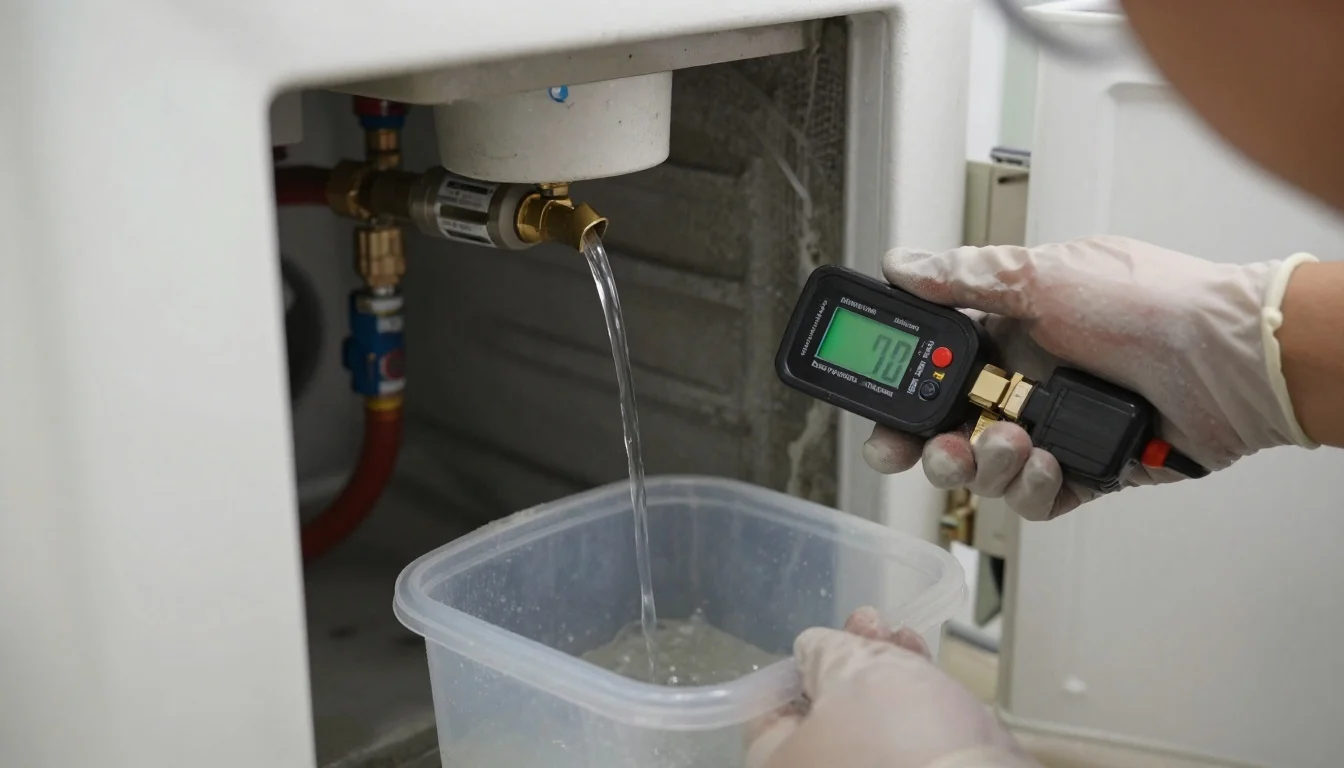
Run the Drain Test
Set the unit to cooling, lower the set temperature and let it run for ten to fifteen minutes. Then check the drain point outside or the pump outlet inside. Water should run away continuously with a visible fall, not pool against the wall or drip into the ceiling cavity.
Look at the indoor head while it runs. No water should spill over the front of the unit or spit from the louvres. A drain hose that is flat, kinked or rises after the unit will back up, even if it looks neat from the outside.
Inspect Pipe Insulation and Sealing
Run your hand along the pipework from the wall entry to the outdoor unit. The refrigerant lines should be fully insulated with no gaps, crushed sections or cable ties crushing the insulation. A sweating or cold patch means the insulation has failed or was never joined properly.
At the wall, the penetration should be sealed against weather, insects and draughts. A plastic cover is not enough by itself. Brisbane homes get ants, geckos and summer rain; an unsealed hole lets all three in.

Verify Electrical Isolator and Circuit
A split system should be on its own dedicated circuit, and there must be an accessible isolator switch near the outdoor unit. It should not be behind the unit or buried in the ceiling. If you cannot reach it in a hurry, it is not compliant in practical terms.
Start and stop the unit several times from the remote and the isolator. It should restart every time without tripping the safety switch in the switchboard. An RCD that trips only when the compressor ramps up often points to an undersized circuit or a wiring fault, not a nuisance trip.
Check Outdoor Unit Clearances
Open the manufacturer’s manual and check the minimum clearances for the outdoor unit. The installer should not have boxed it into a corner or pushed it so close to a wall that the rear coil cannot breathe. Typically the rear needs a gap, one side needs room for service access, and the front must not face a wall a few hundred millimetres away.
Stand beside the unit after ten minutes of cooling. Hot air should leave the fan and dissipate. If it bounces off a fence and wraps back into the coil, the system will run high head pressure and reject less heat. It also should not blow directly into a neighbour’s window or outdoor living area.

Test Cooling, Heating and Controls
Run the unit in both modes, not just cooling. Set it to cooling and confirm the room starts dropping after a few minutes. Then switch to heating and give the reversing valve time to change over. If it never warms, the reversing valve may not be wired or the system may be low on charge.
Check the louvres sweep, the remote responds, and the indoor head is level. Look along The Gap between the unit and the wall; a visible tilt can trap condensate. Put your ear near the head while the fan ramps up. A rattle is usually a loose cover or a pipe clip not fixed inside the wall. Gurgles and water spitting are not normal.
Small Faults Cost More Later
Do not accept the line that a little water spitting is just condensation settling. Even small faults on sign-off become expensive later. A drain that backs up slowly soaks gyprock and paint inside a few weeks. A crushed suction line reduces capacity while the unit still appears to run. An unsealed wall penetration invites insects and moisture into the cavity.
Write the issues on the installer’s paperwork, not just a text message. If something is fixed later, confirm whether the repair includes a re-test of the affected system, not just a patch on the visible part.

Book Your Sign-Off Check
If you want a split system installation Brisbane where the commissioning checks are done properly before you pay, call Air Conditioning Expert Brisbane on 0420 718 827 to book your installation. Ask for a drain test, vacuum report, electrical check and outdoor clearance verification as part of the job.

.jpg "Split System Installation in Brisbane: Sign-Off Checklist")