
The storm has passed, the power is back, and you go to switch on the aircon—then stop and wonder whether that wet, leaf-covered box outside is actually safe to run. Your first concern is split system storm safety. Clear obvious external debris if it is safe, but do not restart the unit if water entered its electrical section, it was submerged, it took a hit, or it now trips the breaker. Those conditions need a licensed electrical and refrigerant safety check.
What should you do after the storm?
Use this sequence. It separates checks you can make from the outside from faults that need testing.
- Confirm the electricity supply is back and stable. Do not repeatedly reset a tripped circuit breaker.
- Inspect the outdoor unit from the ground before touching it. Look for pooled water, a leaning cabinet, displaced mounting, hanging branches, visible impact damage or exposed wiring.
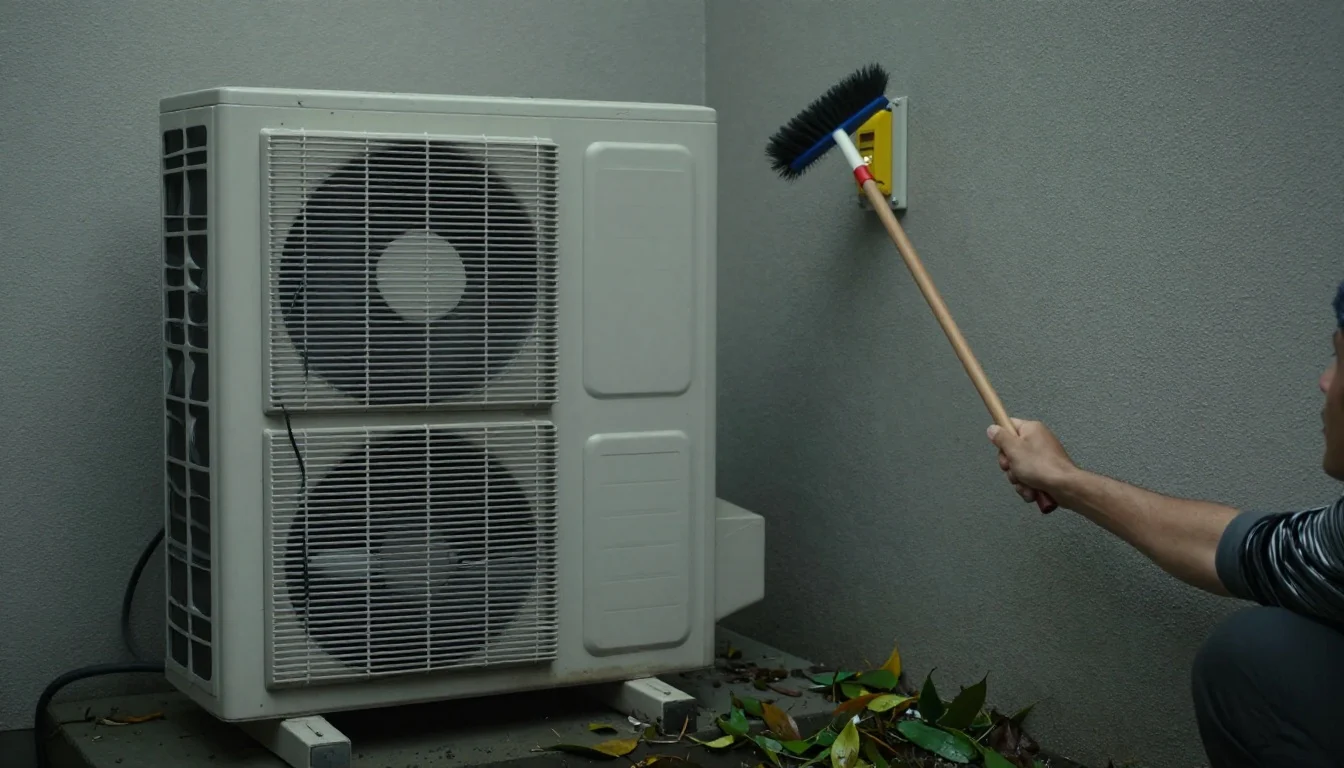
- If the area is safe, remove leaves, branches and silt from around the unit and from its top grille. Do not open the electrical cover or test wiring.
- Check the unit’s position, cabinet, fan area, insulated refrigerant pipes and drain line. Keep this check external; fan blades can move even when the isolator is off.
- Look at the indoor display for an error code before selecting cooling.
If everything looks normal, the electrics stayed dry and the power is stable, you can usually dry the exterior and restart the system. If any stop condition below applies, isolate the power at the circuit breaker and arrange a licensed inspection.
What debris can you clear yourself?
Leaves packed into the outdoor coil or silt wedged behind the cabinet restrict the airflow that carries heat out of your home. A choked condenser makes the system work harder and can trip it on high pressure.
Remove loose leaves, small branches and surface silt from around and on top of the unit. Keep a clear gap on every side so air can enter and leave freely. Do not press bent fins flat with your fingers or reach into the fan grille. Severe blockage or damaged fins need service.
What damage needs a closer look?
After clearing surface debris, inspect what remains visible without removing panels.
- Mounting: The cabinet should sit level and remain firmly fixed to its bracket or pad. A unit rocking in strong wind can damage pipes, mounts and connections.
- Coil and cabinet: Look for bent fins, a cracked casing or anything pressing into the fan. Bent fins reduce airflow; cracked panels can allow more water and debris inside.
- Fan area: Do not spin the fan by hand or put tools through the grille. A damaged blade may strike the casing or create an electrical hazard.
- Refrigerant pipes: Check the insulation for splits, crushing or missing sections. Damaged insulation affects efficiency and leaves pipework exposed.
- Drain line: Look for a disconnected, kinked or split line. A blocked drain can send condensate where it should not go.
Do not remove the outdoor unit’s electrical cover. Do not tighten internal parts, straighten a fan or reconnect refrigerant piping yourself. Those checks require the right tools and licensing.

When must the unit stay off?
Water reached the electrics
If water visibly entered the electrical section, or the unit was submerged or sitting in pooled water, do not switch it on. Isolate it at the circuit breaker and book a licensed check. Rain on the outside of a correctly installed outdoor cabinet is normal; standing water reaching internal electrical parts is not. A wet casing alone does not automatically condemn the unit, but you still need to confirm that the electrics remained dry.
Debris or lightning struck it
If flying debris hit the cabinet, fan area or pipework, stop before restarting. Impact damage may be hidden behind the grille or insulation. After a nearby lightning strike, do not keep trying the remote if the system will not start or repeatedly trips the breaker. Resetting it can expose damaged components to another surge. Repeated breaker trips indicate an electrical fault that needs testing, not another reset.
What order should power restoration follow?
Wait until the electricity supply is stable after an outage. Then inspect the outdoor unit and check that the indoor display is not showing an error code before running the system in cooling. If the breaker trips, the unit stalls, makes a new rattling noise or fails to start, switch it off and leave it isolated. Do not cycle the breaker to force a start.
How can you prepare for the next storm?
Before the next heavy weather event, secure loose items near the outdoor unit so they cannot become projectiles. Trim overhanging branches back from the cabinet and top grille. Confirm that the unit remains above likely pooling points on its slab; if water regularly collects around its base, its position may need correcting.
If your home is prone to outages or surge-related faults, consider a surge-protective device at the switchboard. It cannot stop physical impact or make a flooded unit safe, but it adds protection for the electrical supply path. Also keep the surrounding clearance free of stored pots, tools and garden equipment.

When do you need a licensed check?
Book a licensed electrical and refrigerant safety check before using the system again if water entered the electrical section, the unit was submerged, debris struck it, the cabinet or fan is damaged, pipework moved, or the breaker trips. Cooling performance and electrical safety are not things to guess at. A technician can inspect the mounting, electrical components, refrigerant circuit and drainage, then carry out a controlled restart once the fault has been addressed.
Air Conditioning Expert Brisbane handles the electrical and mounting side of split system installation, so a post-storm inspection and safe restart is a natural extension of the work. Call 0420 718 827 to book a licensed safety check and restart.