




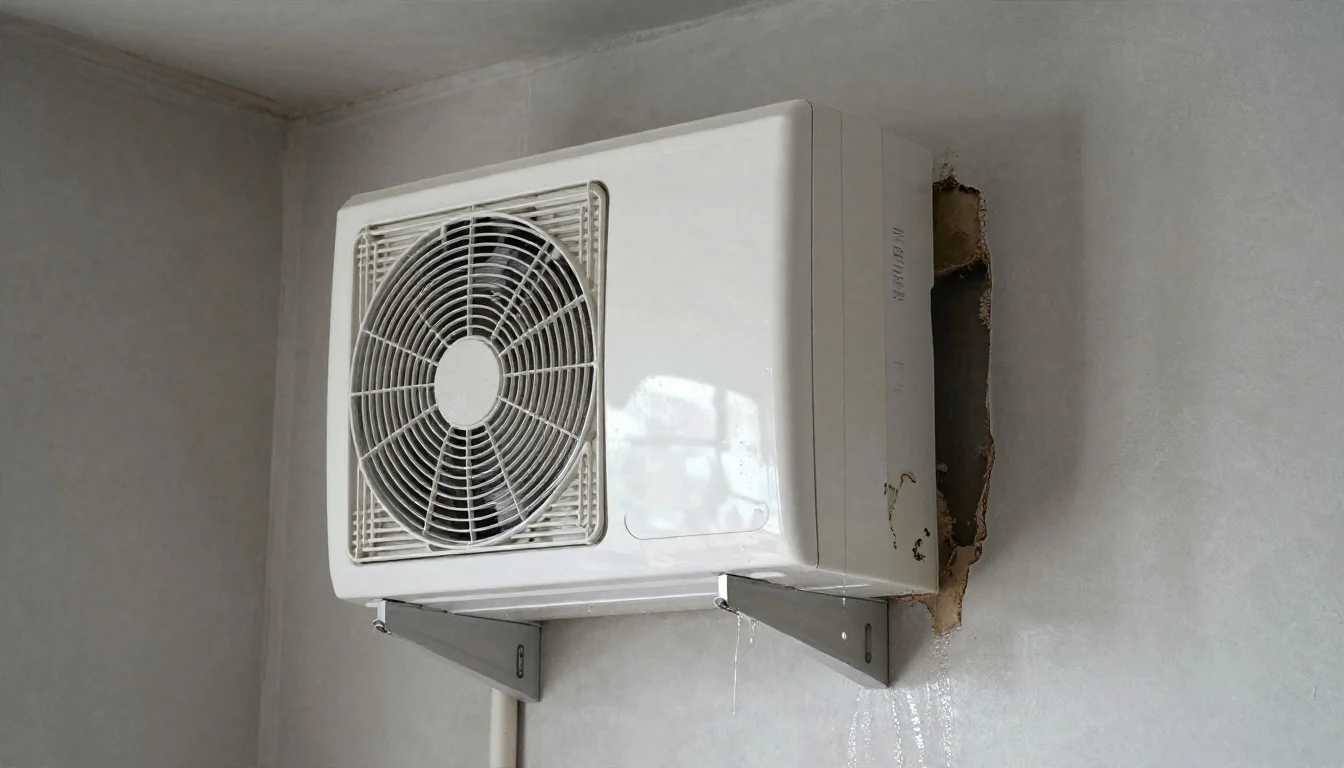
The installer has packed up, the unit is blowing cold, and you are standing in the room looking at a neat circle of raw plasterboard around the pipework and a length of white conduit stapled down the wall. Nobody mentioned who fixes that. The short answer is this: making the wall good is not automatically part of the installation. What gets patched, sealed and painted depends on what your installer has agreed to in writing, and the gaps between trades is exactly where split system wall repair problems start.
Three Holes, Three Different Finishes
A standard Brisbane residential split system install leaves three openings that a homeowner tends to notice once the dust settles:
- The indoor head’s mounting bracket — usually four to six small screws into the wall plate behind the unit.
- The 65mm-ish core hole drilled through the wall for the refrigerant pipes, condensate drain and interconnecting cable.
- The conduit run on the outside wall, carrying the cable from the indoor unit down to the outdoor unit.
Each of those is finished by a different trade. The installer handles the holes. A plasterer handles the skim coat and sanding. A painter handles the colour match. If your quote does not name who does what, the homeowner ends up holding the gaps between them.
The Core Hole Is the One That Matters
Of the three, the core hole is the leak risk, not the cosmetic risk. Two specific things have to happen when it is drilled:
- The hole must be drilled with a slight downward fall to the outside, so condensate drains out and any driven rain runs away from the building rather than into the wall cavity.
- The pipe bundle must be sealed around the outside with a flexible sealant — silicone or polyurethane — once the unit is commissioned. Foam alone is not a seal.
That unsealed core hole is a Brisbane storm-season water entry point. Wind-driven rain pushes water through an open hole and into the wall cavity faster than most people expect, and the damage does not show up on the day — it shows up later as a stain, a soft patch, or a musty smell.
What Installers Actually Do
The trade rule of thumb is straightforward: installers drill the hole, pass the pipework through, and seal around it. They do not skim, sand, paint or match texture. If the quote does not specifically say “make good” or “patch and paint”, the homeowner should assume bare plasterboard around the back entry plate, a visible raw edge where the core hole is, and a conduit run clipped to the wall in white PVC.
That is a normal, professional install. It is not a mess left behind — it is the boundary of the installer’s scope.

Conduit: Surface or Recessed?
One decision has to be made before the installer arrives, because it cannot be undone without pulling the indoor unit back off the wall:
- Surface-mounted conduit — cheaper, faster, fully visible on the wall. The installer clips it in place and the job is done.
- Recessed conduit — the wall is chased, the conduit dropped into the chase, then plastered and painted over for a flush finish. This needs a plasterer and a painter on the same job, and has to be done before the indoor unit is remounted.
Surface conduit is what most Brisbane installs end up with, and that is a choice, not a compromise.
What the Quote Must State in Writing
A split system quote should itemise four things on the wall side, not bundle them into “installation”:
- Whether the core hole is included and whether it is sealed with flexible sealant.
- Whether the conduit is surface-mounted or recessed, and who is chasing the wall if recessed.
- Who is responsible for patching the plasterboard around the bracket and the hole.
- Who is painting, and that the painting follows the installation — not the other way around.
If any of those four is missing, the homeowner is filling The Gap. A quote that says “supply and install” without those lines has not promised a finished wall.

Before You Sign Off the Job
Two things to confirm on the wall before the installer leaves, because coming back to fix them is a separate call-out:
- The outdoor unit’s condensate is discharging where it should, not back toward the wall or the neighbour’s path.
Both are five-second checks. Skipping them is how a clean install turns into a follow-up job.
Ask for the Make-Good Scope in Writing
If the wall side of the install is not itemised in the quote, ask for it before the job is booked. Drilling the core hole with fall, sealing around the pipework, and routing conduit on the surface or in a chase are all decisions that are cheaper to make on paper than on a finished wall. Air Conditioning Expert Brisbane sets out hole drilling, sealing and conduit routing in writing before the install date, so the boundary between the installer’s patch and the plasterer’s finish is settled before anyone picks up a drill. Call 0420 718 827 to get a written scope for the wall side of the job.


