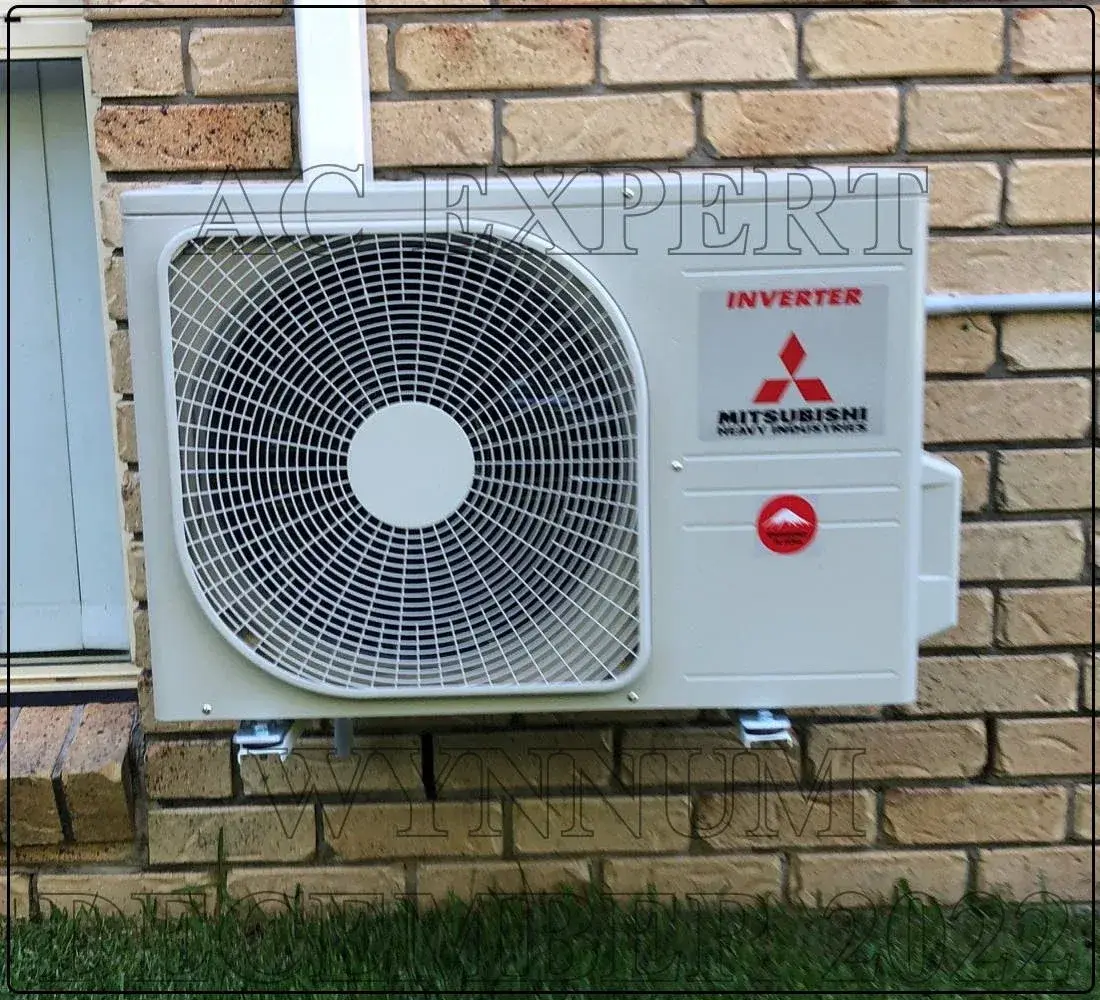


You have chosen the unit, measured the wall, and you are ready to book — then someone asks whether your switchboard has a spare way for the new circuit, and you realise you have no idea. Most homeowners never look inside their switchboard until something trips, and the box mounted on your garage wall in Redcliffe probably has not been opened since the day you moved in. But that box decides whether your split system installation happens in one visit or turns into a rescheduled job with a unit sitting on a pallet and a hot house behind you.
Here is the direct answer: a new split system needs its own dedicated circuit, and if your switchboard cannot take one, a switchboard upgrade Redcliffe before the installation can proceed. The question is not whether you need to look at the board — it is how to find out what it will take before you commit to a quote.
Why a split system needs a dedicated circuit
Your split system’s outdoor compressor draws high current on start-up, not just when it is running at full speed. That inrush of power is far more than a light circuit or a general-purpose power point is designed to carry. If your installer simply tapped into an existing circuit — which a licensed electrician will not do — you would risk tripping breakers every time the unit fired up, overheating the wiring, and potentially damaging the compressor over time.
Because of that start-up draw, the air conditioning circuit must be rated to the unit’s specific capacity and run back to the switchboard as a separate line. This is not a nice-to-have; it is how the system is designed to operate. It is also the single most common reason an install stalls. The unit is on the wall, the pipes are connected, and then the electrician opens the board and finds there is nowhere to put the new breaker.
Three board conditions that trigger an upgrade
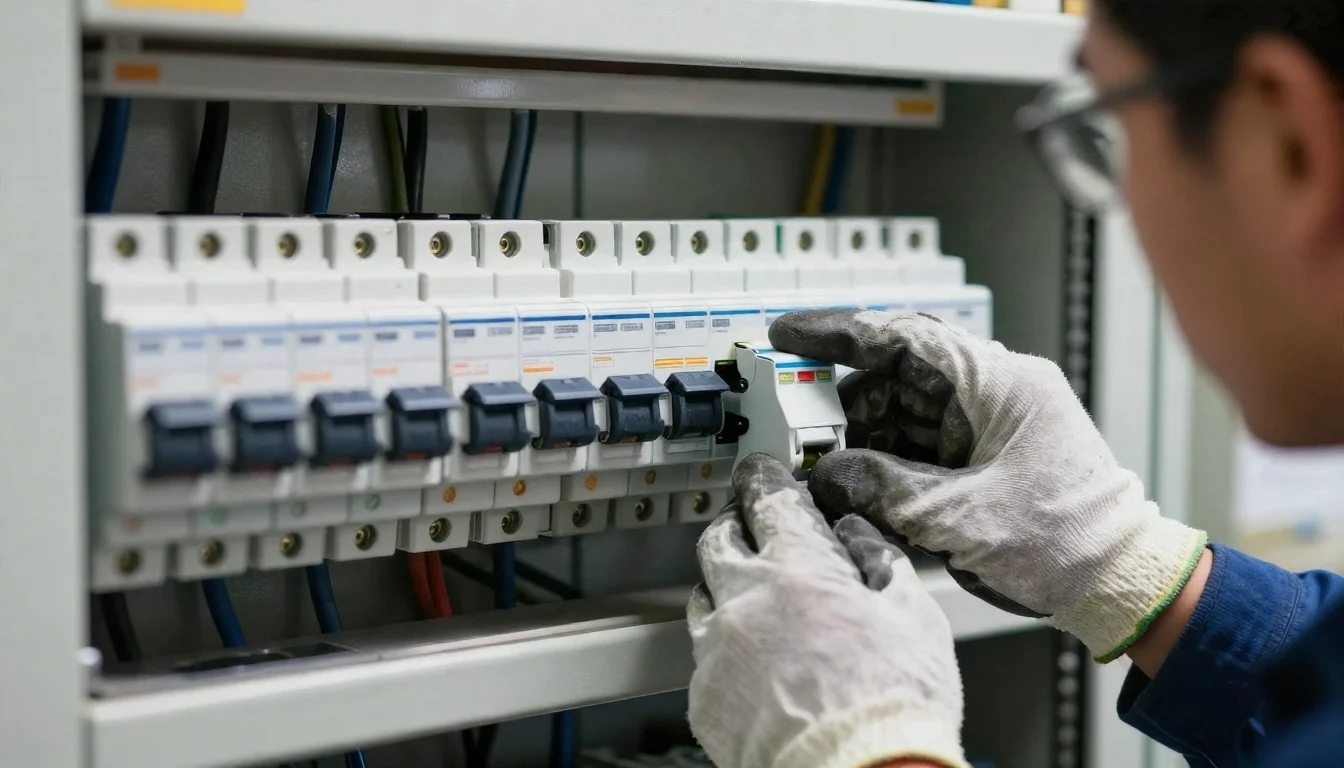
When we open a switchboard during a pre-install check, we are looking for three specific conditions. If you have any of them, the board will need work before your new split system can be connected.
First, there may be no spare pole or space for a new breaker. A split system circuit needs its own dedicated breaker in the board, and older boards often have every slot filled. The panel is physically full, so the new circuit has nowhere to go.
Second, the board may lack RCD — residual current device — protection on the new circuit. An RCD, which you will know as a safety switch, cuts power in milliseconds if it detects a fault. Australian wiring rules now require RCD protection on new circuits, including air conditioning circuits. If your board has no safety switches at all, or the new circuit would not be protected by one, that is an immediate trigger for an upgrade.
Third, the board may be fuse-based or undersized for the added load. Older fuse boards use wire or ceramic fuses, not modern circuit breakers. They were never designed for the current draw of a modern inverter split system, and adding a high-load circuit to a board that is already at its limit is a safety risk, not just a compliance issue.
What an upgrade actually means
An upgrade is not “adding a fuse.” It is replacing the enclosure and the breakers inside it, fitting RCD protection, and creating a spare way for the air conditioning circuit. In practice, that means your installer or electrician will swap out the old panel for a new one, install modern circuit breakers, add any missing safety switches, and leave a dedicated space for your new split system’s breaker.

The question to ask every installer
Here is the decision rule that will save you a headache: ask every installer, at quote stage, to state in writing whether your existing switchboard has capacity for the proposed unit and whether an upgrade is included, excluded, or conditional. Treat a quote that is silent on this as incomplete.
The timing trap you can avoid
If an upgrade is identified on install day, the sequence is always the same. The installer stops work because the board cannot safely carry the new circuit. The job is rescheduled while an electrician is booked to do the board work. And you are left with a new split system in boxes, a room that is no cooler than it was this morning, and a decision about whether to wait for the rebook or call someone else.
That is why the switchboard question belongs in your first conversation with an installer, not the last. It is the difference between a one-visit installation and a two-visit ordeal, and it is entirely avoidable if you ask the right question early.

What you can check yourself
You do not need to touch anything inside the board to get a good idea of what you are dealing with. Stand in front of it and look. First, check whether there are spare blank spaces in the board — gaps where a new breaker could be fitted. If you cannot see a spare way, that is a strong sign an upgrade is needed.
Second, look at the switches. Modern circuit breakers and safety switches have a small test button on them, usually marked “T” or “test.” If none of the switches in your board have a test button, your board has no RCD protection, and that will need to be addressed before your new split system can be installed.
Third, check whether the board is fuse-based. If you see ceramic fuse holders or wire fuses instead of flip-style circuit breakers, your board is older than the modern standard and will very likely need to be upgraded to take a new air conditioning circuit. These three checks — spare spaces, test buttons, and fuses — are enough to tell you which questions to ask when you request quotes.
When you are comparing installers for your Redcliffe home, make the switchboard part of the conversation from the start. We install split systems across Brisbane, and we scope the electrical side as part of the installation quote. We tell you upfront whether your board can take the new circuit — not after we have started the job. Call us at 0420 718 827 with a photo of your switchboard and the unit you are considering, and we will tell you what to expect before you book. You should not need to open the board yourself; you just need to know the right question to ask.