



In response to: the original article at hvacrnews.com.au
hvac install fails
Let’s be honest: we’ve all seen a ceiling cavity that made us question whether gravity was just a suggestion. But when it comes to HVAC install fails, the line between “oops” and “oh no” is thinner than the duct tape holding some of these systems together. A recent collection of blunders, submitted by an air balancer with a sharp eye and a dry sense of humour, serves as a masterclass in how not to install ductwork. Squashed flex, disconnected boots, and exhaust ducts that look like deflated party balloons—these aren’t just laughable oversights. They’re a reminder that cutting corners in air conditioning installation doesn’t just waste money; it turns your home’s comfort into a game of chance. So, let’s take a tour of these fails, not to mock the mistakes, but to learn why they matter—and how to avoid them.
Duct Tape Fixes
Ah, duct tape: the handyman’s best friend and, apparently, the HVAC installer’s get-out-of-jail-free card. In one of the submitted photos, a length of flex duct had been removed, and the remaining stub was “capped” with—you guessed it—duct tape. Now, we’re not saying duct tape doesn’t have its place. It’s great for holding together a torn tent or silencing a squeaky hinge. But when it comes to ductwork, it’s about as reliable as a chocolate teapot.
Here’s the thing: duct tape isn’t designed for the temperatures, humidity, or airflow pressures inside ductwork. Over time, the adhesive dries out, the tape peels away, and suddenly your system is leaking conditioned air into the ceiling cavity like a sieve. That’s not just inefficient; it’s a waste of energy and money. If you spot duct tape in your ductwork, it’s a red flag that someone took a shortcut—and you’re the one paying for it.
Why It Matters
Leaky ducts force your air conditioner to work harder to maintain the same temperature, which means higher electricity bills and more wear and tear on the system. In Brisbane’s humid climate, that extra strain can also lead to mould growth in the ceiling cavity, turning a simple fix into a much bigger (and smellier) problem. Properly sealing ducts with mastic or foil tape might take a little more time, but it’s the difference between a system that works and one that’s just pretending.
Flex Duct Fails
Flexible ducting is a staple in modern HVAC installations. It’s lightweight, easy to install, and can snake through tight spaces like a pro. But when it’s installed poorly, it turns into a comedy of errors. The submitted photos showed flex ducts squashed by pipes, kinked like a garden hose, and disconnected entirely. In one particularly egregious example, a flex duct was so compressed by a heating water pipe that it looked like it had been through a car crusher.
Flex duct is only effective if it’s fully extended and properly supported. When it’s squashed or kinked, airflow is restricted, and your system has to work overtime to push air through the bottleneck. That’s like trying to drink a milkshake through a straw that’s been stepped on—frustrating and ultimately pointless.

The Right Way
Flex duct should be supported every 1.2 to 1.5 metres with straps or hangers to prevent sagging. It should also be installed with gentle bends, not sharp kinks, to maintain smooth airflow. If you’re having a split system installed, ask your technician to show you the ductwork before they close up the ceiling. A quick visual check can save you a world of trouble down the line.
Air Boots Gone Rogue
Air boots—the metal or plastic collars that connect ductwork to your ceiling vents—are usually out of sight and out of mind. But in one of the submitted photos, a light air boot had toppled over in the ceiling cavity, like a drunk guest at a party. When an air boot isn’t secured properly, it can shift or disconnect entirely, sending conditioned air into the ceiling instead of your living space. That’s not just inefficient; it’s like paying to cool your attic.
The fix here is simple: air boots should be screwed or clipped into place to prevent movement. If they’re not secured, they can shift during installation or over time, especially if the ceiling is disturbed by other work (like, say, an electrician running new wiring). A loose air boot might seem like a minor issue, but it’s one of those small details that can have a big impact on your system’s performance.

Check Before Closing
If you’re having ductwork installed or modified, ask your technician to walk you through the setup before they seal the ceiling. A quick inspection can catch issues like loose boots or disconnected ducts, saving you from costly repairs later. And if you’re ever up in the ceiling yourself (for storage or repairs), keep an eye out for anything that looks out of place. A little vigilance goes a long way.
hvac install fails — what matters
Exhaust Duct Disasters
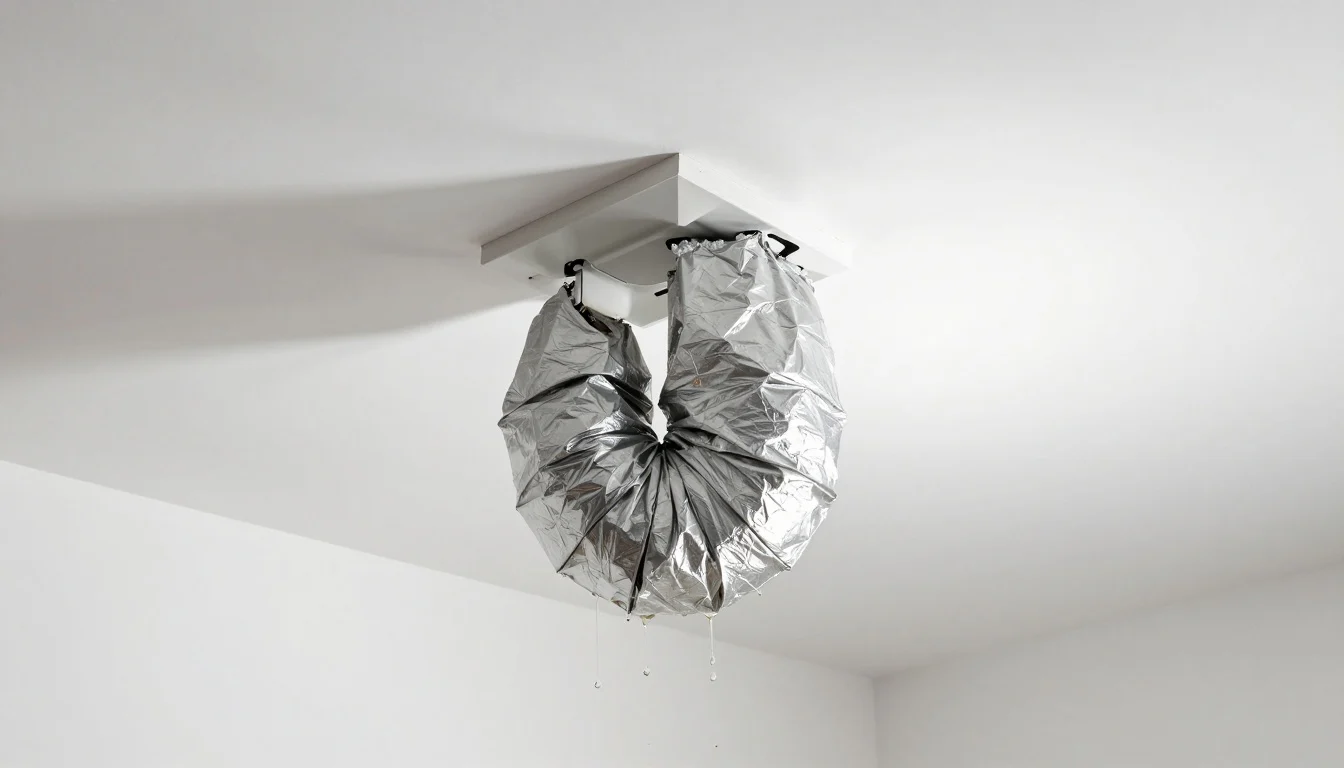
Kitchen exhaust ducts have one job: to remove hot, greasy air from your home. So when one of the submitted photos showed a deflated exhaust duct—thanks to a tear—it was like seeing a lifeguard who can’t swim. A torn exhaust duct doesn’t just fail to remove air; it can also allow grease and moisture to build up in the ceiling cavity, creating a fire hazard and a breeding ground for mould.
Exhaust ducts should be made of rigid metal or high-quality flex, not flimsy materials that can tear or collapse. They should also be properly supported and sealed to prevent leaks. If your kitchen exhaust duct looks like it’s been through a war, it’s time to call in a professional for a replacement. Don’t wait until you’re dealing with a ceiling full of grease or a musty smell that won’t quit.

Prevention Is Key
Regular maintenance is the best way to avoid exhaust duct disasters. If you notice your kitchen exhaust fan isn’t working as well as it used to, or if you see grease buildup around the vent, it’s time for a check-up. A professional can inspect the ductwork, clean out any blockages, and repair or replace damaged sections. It’s a small investment that can prevent big problems down the road.
Why These Fails Happen
So why do these HVAC install fails keep happening? The answer usually comes down to one (or more) of three things: rushing, cutting corners, or lack of training. Installing ductwork properly takes time, patience, and attention to detail. When technicians are under pressure to finish a job quickly, or when they’re not properly trained, mistakes happen. And unfortunately, it’s the homeowner who pays the price.
Another common culprit is the “out of sight, out of mind” mentality. Ductwork is hidden in the ceiling, so it’s easy to assume that no one will notice if it’s not installed perfectly. But your air conditioner notices. Your electricity bill notices. And eventually, you’ll notice too—when your system isn’t cooling properly, or when your energy costs skyrocket.

Choose Wisely
If you’re hiring someone to install or repair your HVAC system, don’t just go with the cheapest quote. Look for a licensed, experienced professional who takes pride in their work. Ask for references, check online reviews, and don’t be afraid to ask questions. A good installer will be happy to explain what they’re doing and why it matters. And if they’re not? That’s your cue to walk away.
What You Can Do
Even if you’re not an HVAC expert, there are a few things you can do to protect yourself from install fails. First, educate yourself. Know the basics of how your system works and what to look for during installation. Second, be present during the installation process. Ask questions, take photos, and make sure everything looks right before the ceiling is closed up. And third, trust your instincts. If something feels off, it probably is.
If you’re in Brisbane and looking for a professional split system installation, don’t settle for anything less than the best. A well-installed system will keep your home comfortable, your energy bills low, and your ceiling cavity free of surprises. And isn’t that what we all want?
Final Thoughts
HVAC install fails might make for entertaining photos, but they’re no laughing matter when they’re costing you money and comfort. The next time you see duct tape in your ductwork or a kinked flex duct, remember: these aren’t just mistakes. They’re signs of a system that’s not working as efficiently as it should. And in Brisbane’s climate, efficiency isn’t just a luxury—it’s a necessity.
So, let’s raise a glass to the installers who do it right, and a raised eyebrow to the ones who don’t. After all, your home’s comfort deserves better than duct tape dreams and ceiling cavity surprises.
.jpg "Split System Air Conditioner Installation Fails in Brisbane")