



The unit was installed last summer, it worked perfectly, and now in its second January it is blowing warm air. You ring the brand’s support line, wait on hold, and are told the fault is at the flare joint. That is not a component defect. It is not the manufacturer’s problem. And unless you have the right paperwork, it might become your bill. Understanding how a split system warranty Brisbane actually works separates a free repair from a costly mistake.
When a split system fails after installation, the responsible party depends entirely on the nature of the fault. You are covered by two separate warranties: the manufacturer provides the warranty on the unit itself, while the installer provides the warranty on the workmanship. These cover different failures, run for different periods, and are claimed through different parties. Knowing which one applies to your fault, and having the paperwork to prove both, is what determines whether a repair costs you nothing or costs you the call-out fee.
Two warranties cover different things
Every split system install has two separate warranties in play. One belongs to the manufacturer and covers the unit itself. The other belongs to the installer and covers the workmanship. They cover different failures, run for different periods, and are claimed through different parties.
What the manufacturer covers
The manufacturer warranty covers defects in the unit itself. This includes the compressor, circuit board, and fan motor. If a component fails due to a manufacturing fault, the brand is responsible. However, a unit cannot be defective if the installation damaged it. A refrigerant leak at a flare connection in year two is usually a workmanship issue, not a manufacturer one. The unit was fine; the joint was not.
What the installer covers
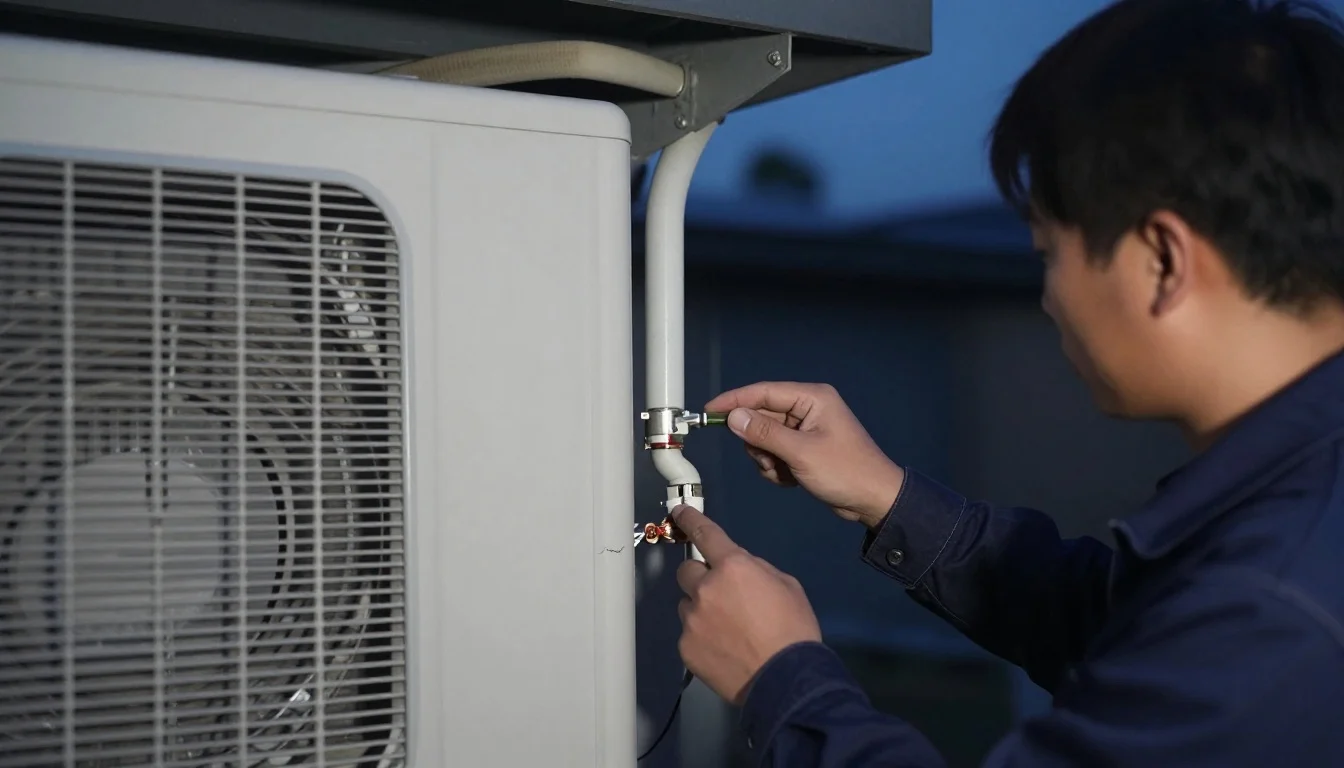
The workmanship warranty covers the installation process. This includes gas leaks at flare joints, drainage faults, electrical connections, and mounting. If the unit is not cooling because a pipe was not vacuumed correctly or a drain is not pitched right, that is an installer problem. Homeowners often assume that the aircon is broken, it’s under warranty. But the correct claim is against the installer, not the brand.
Common failures point to the installer
The most common Brisbane failure mode is a slow refrigerant leak from flare joints. This is not a unit defect. It is an installation issue. This matters because homeowners often assume the entire unit is covered. In reality, if the leak is at a connection point made during install, it falls under the installer’s workmanship warranty. Without proof of who did the job, you cannot make this claim.
Why flare joints matter
Flare joints are where the copper pipes connect to the outdoor unit. They require specific torque and skill to seal properly. If they are not done right, the refrigerant escapes slowly over months. This looks like a slow drain. A technician might find the leak and want to fix the whole system. But if the joint is the source, the installer should fix it under their warranty.

Electrical and mounting issues
Mounting and electrical connections also fall under workmanship. If the outdoor unit is not level, it will vibrate and make noise. If the wiring is not terminated right, the board will trip. These are not component failures. They are setup errors. The installer is responsible for the quality of the physical job.
Registration changes the warranty start date
The warranty period is typically counted from the installation date, not the purchase date. This means a unit sitting in a garage for months before install can shorten effective coverage. Most manufacturers require the unit to be registered after installation. Keep the installation date, model number, and serial number in one place. This proves when the clock started.
What registration proves
Registration confirms the unit was installed by a qualified technician. It links the serial number to the install date. Without this, the manufacturer may only use the purchase date. This shortens your effective coverage period. Ensure your installer handles the registration or gives you the details to do it yourself. This step activates the manufacturer side of your split system warranty.

The proof problem for workmanship claims
A warranty claim on workmanship needs evidence of who installed it and when. You need a tax invoice showing the installer’s details, the model installed, and the date. A cash job with no invoice leaves the homeowner holding the cost of a repair that should have been free. Without this paper trail, the installer can deny the work was done by them. Keep your paperwork in one folder.
Why tax invoices matter
An invoice is your legal proof of service. It shows the scope of work and the price paid. It proves the install date and the unit model. Without it, you cannot prove the job belongs to a specific installer. When a fault occurs, the first question is who did the work. If you cannot answer that, the warranty path is blocked.
When maintenance beats warranty
Warranty does not cover owner neglect. Blocked filters, a dirty outdoor coil, or a unit that has never been cleaned is not a warranty matter. It is owner maintenance. Manufacturers and installers both treat neglect as grounds to decline a claim. If your unit is clogged with dust, they will deny the repair. Keep a simple record of filter cleans so a future claim can be defended.

How to spot neglect
If a unit has been installed for two years and the filters are caked in dust, that is neglect. If the outdoor coil is blocked by leaves, that is neglect. These conditions cause the system to work harder and fail. They are not defects. The installer and manufacturer will not pay for failures caused by lack of care. A service logbook is your best defense against claim rejection.
Decision rules for homeowners
If the fault appears within the first weeks or months and relates to how the unit was fitted, go back to the installer first. This includes noise, leaking water, or the unit not cooling as specified. These are likely setup issues. If the fault is a component failure well after install with a clean service history, the manufacturer’s network is the right path. But the installer is still the one who knows the job best.
If the leak is at a flare joint, call the installer, not the brand
For leaks, noise, or mounting issues, call the installer. They are responsible for the physical job. For board failures or compressor issues, check the manufacturer’s process. But always start with the installer if the job is recent. They have the most context on how the system was set up. If the installer denies responsibility and you have the paperwork, escalate to the manufacturer.

Keeping records for the future
The practical step most homeowners skip is keeping the installation invoice, model details, and service record together. This makes it possible to make a future claim. Without these, you are guessing which warranty applies. This documentation is the backbone of your protection. Store it digitally and physically so it survives a move.
At Air Conditioning Expert Brisbane, we document the job properly and stand behind the workmanship side of the warranty. We ensure your invoice, registration, and service history are clear so you know who to call if something goes wrong. Keep the installation invoice, model details and service record together, and call Air Conditioning Expert Brisbane first because they documented the job and stand behind the workmanship warranty.
.jpg "Split System Warranty After a Brisbane Install: Who Fixes It")