




You have picked the unit, the installer is booked, and now someone has to decide which wall the indoor head goes on and where the outdoor unit sits. Get the split system wall placement wrong and you live with the consequences for the next decade — poor cooling, higher running costs, and noise you cannot switch off. Here is the direct answer: the indoor head goes on the wall that throws air across the longest open path away from seating, beds and the cooktop, mounted with its top 2.1–2.3 m above the floor and at least 150 mm below the ceiling. The outdoor unit goes on a shaded south or east wall with roughly 300 mm rear clearance and 500 mm front clearance. Placement matters more than the brand stamped on the box. This is what we check before any bracket goes on a Brisbane wall.
Start with the room, not the wall
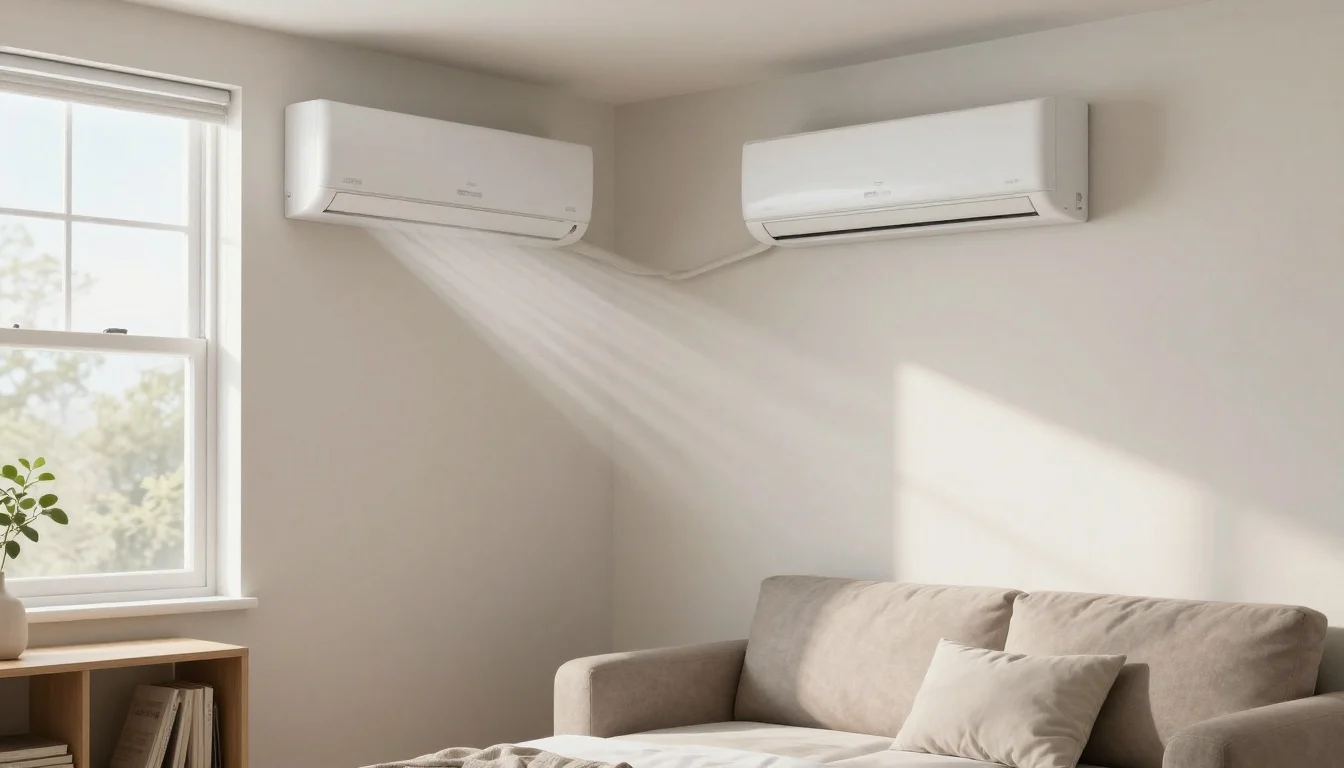
The first measurement is the indoor head height: top of the unit 2.1–2.3 m above the floor, with 150 mm clear of the ceiling. At that height, cool air gets a full ceiling arc and settles back over the occupied zone instead of dropping straight onto occupants. The compressor is not blowing directly on you; the room is circulating. That means the first question is seldom which wall looks least cluttered. It is which wall sends air across the longest open path without cutting through where people actually sit, sleep or stand.
Walk the room before you measure anything. Find the lounge positions, bed head, dining table and kitchen bench. Now imagine a hard stream of cold air running in a straight line from the proposed head unit. If that stream crosses a bed, a favourite chair, or a stove where steam is rising, the wall placement candidate is already weak. We see this on Brisbane service call-backs — the unit works, the pressures are fine, but the owner cannot relax.
Three spots that fail immediately
Three things rule out an indoor wall before you go further. First, the wall has no practical route to the outdoor unit without a pipe run so long it looks lazy and leaks cost later. Second, the wall faces direct afternoon sun through uncovered glass; the indoor unit misreads radiant heat on the wall and short-cycles. Third, the spot places the head directly above a window pelmet, a tall cupboard or a shelf that interrupts discharge air.
We also reject positions where the condensate line cannot fall by gravity. The drain tray sits below the coil, so the drain pipe must run continuously downhill to a legal discharge point. On a Brisbane slab-on-ground home, that usually means through the wall behind the unit and down to an external garden bed or stormwater point — never dripping onto a path where it becomes a slip hazard.
The placement nobody wants later
A wall directly behind or beside the head of a bed is the most common regret from Brisbane homeowners. Cold air falls onto faces and shoulders at night, forcing them to run the unit warmer than needed. They cannot move the bed because the room layout does not allow it. This is fixed at install time. If the only sensible wall is the bed wall, choose a shorter wall that throws air across the foot of the bed, and direct the louvres away from pillows.
Kitchen rule: keep discharge clear
The indoor head must not blow directly onto where people cook. Keep the discharge at least 1 m clear of the cooktop and direct the louvres away from the bench. Hot vapour from cooking needs to rise and move away, and the airstream needs free run past benches, not against them. A head mounted opposite the kitchen that sweeps the dining zone and rolls back through the bench area works only if that 1 m rule holds.
Outdoor unit: shade beats pretty
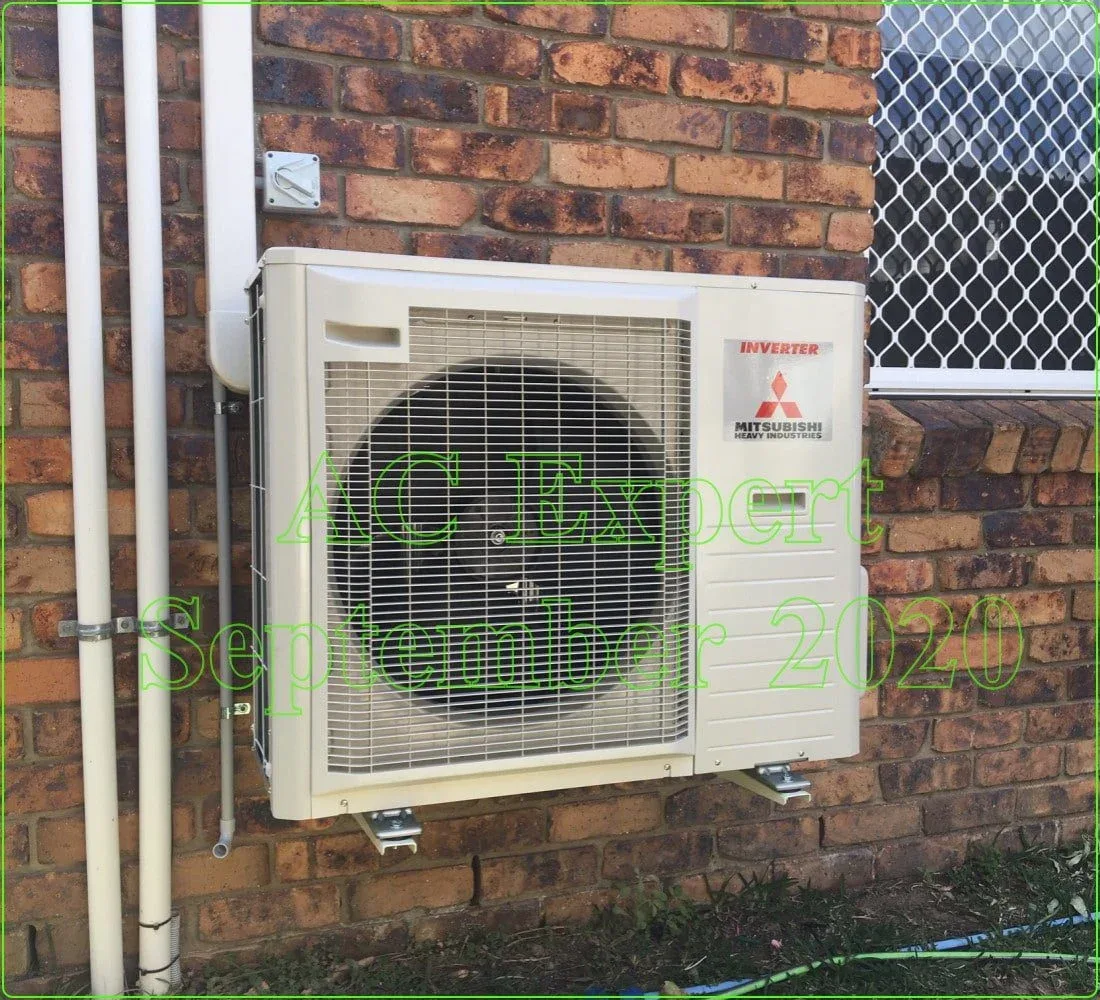
The condensing unit sits outside to reject heat, and it needs airflow. A unit boxed into a narrow side path with fence palings on one side and a rendered wall on the other will run hotter, work harder and cost more to run than the same unit in free air.
Allow roughly 300 mm clearance behind the coil and 500 mm in front of the fan discharge. The back is where smaller domestic splits draw air through the thin coil; the front is where the fan pushes heated air away. Also leave enough room to open the electrical service panel — a technician needs to get a screwdriver and probes in there without lying over the coil.
Queensland sun rule for condensers
Do not put the outdoor unit on a west or north-west wall if you can avoid it. Brisbane afternoon sun heats the aluminium fins and compressor casing, raising condensing pressure and pushing up power draw at the exact moment you need the most performance. A south or east wall is almost always the better split system wall placement for the outdoor unit.
If a south or east wall is unavailable, fit a shade screen or perforated aluminium blade above and to the western side of the unit. The screen must not block airflow. A solid enclosure 600 mm from the unit is still a heat trap.

Pipe run drives the final call
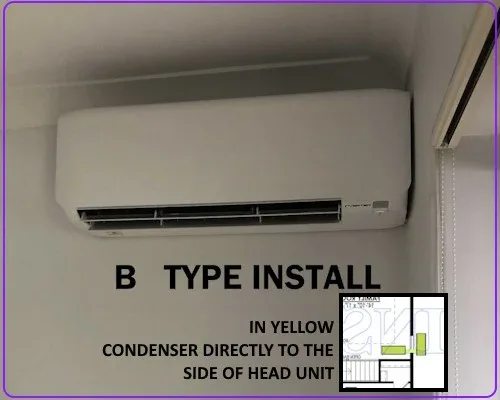
The indoor and outdoor units are joined by copper refrigerant lines, electrical cabling and a drain. Check the factory pair-set limit for the unit you have chosen, then decide based on the shortest sensible path between the two positions. That usually means through the wall directly behind the indoor head and straight down the outside. On a double-storey Brisbane home, pushing the outdoor unit to the opposite side so it hides behind the hot water system means more refrigerant pipe, more joins and a larger visible capping along the fascia. Every extra metre costs labour and adds another point where the install can look messy.
We inspect before drilling starts
When we attend a Brisbane home to install a split system, the first thing we do is stand in the room without a drill. We check outdoor wall availability, measure ceiling height and plan the airstream over the furnishings. We walk the pipe path outside and estimate the line-set length before ringing a purchase. We check drainage fall from the chosen indoor height to the lawful discharge point, because wall cavity depth varies and the drain may need to exit higher than expected.
Only after that do we fetch the mounting plate. The wall placement decision is made before the unit is fixed in place, not adjusted after the first hot night. Book a room survey with Air Conditioning Expert Brisbane before the bracket is fixed so the head, outdoor unit and drain route are confirmed on site.

.jpg "Split System Install: Which Wall in Your Brisbane Home?")