



The installer has left and the unit is humming. You have no idea whether that comfort is costing you two dollars a day or ten. The number on the remote is only part of the answer. What actually drives the split system running cost after installation comes down to four things you can mostly control before summer arrives.
The Sizing Trap
An oversized unit short-cycles constantly. It turns on, blasts cold air, and shuts off before reaching steady operation. That start-up phase draws maximum power. A correctly sized unit runs longer at lower output, which is where the real savings sit for Brisbane homeowners.
If you choose a 5kW system for a small room just to “be safe,” you will likely pay more to run it than a correctly sized 3.5kW unit. The difference in power draw often becomes obvious within the first three months of cooling.
The rule is simple: match the kW rating to the room’s actual load, not a gut feeling. Oversized units don’t save money; they waste it through inefficient cycling. Correct sizing ensures the compressor runs in its most efficient zone for longer periods.
Setpoint Impact
Each degree you raise the cooling setpoint reduces power draw by roughly 5 to 10 percent. Setting your thermostat to 18°C in a Brisbane summer is expensive. Target 24 to 25°C instead for a practical balance of comfort and cost.
This rule holds regardless of brand. Even a high-efficiency inverter cannot fully compensate for setting the target too low. If you need to cool a room, every degree below 24°C costs you significantly more energy.
Act on this tonight: raise your setpoint by two degrees and see how the comfort feels. Most homeowners find the higher temperature barely noticeable when airflow is correct, but the electricity savings are immediate and measurable.
Outdoor Unit Placement
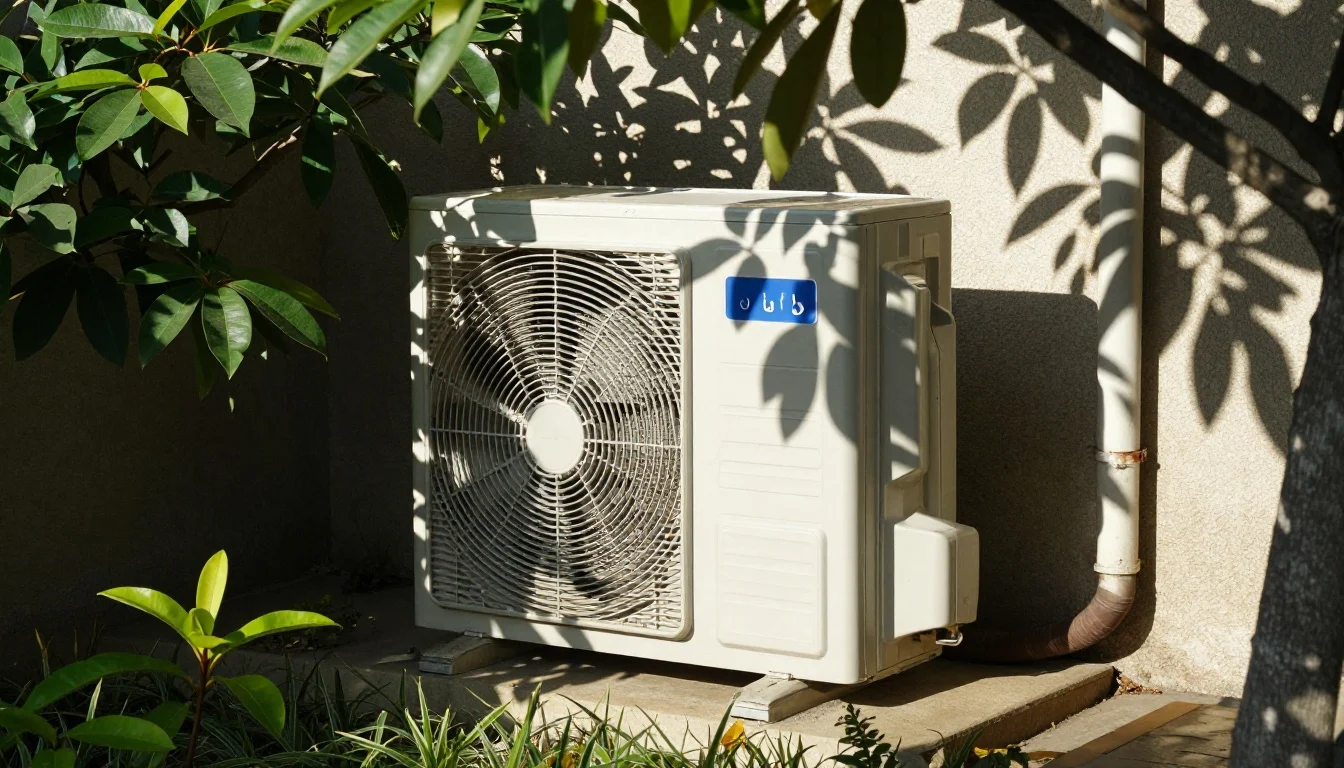
A unit in full afternoon sun or with restricted airflow around the condenser works harder for the same result. Shade and clearance are installation-time decisions, not afterthoughts. If you install it on a west-facing wall with no shade, it struggles to reject heat when you need it most.
This location choice locks in your efficiency for the life of the equipment. Adding a shade structure later helps but cannot fix the thermal load created by poor siting at install time. The outdoor fan must move air freely to work efficiently.
Keep at least a meter of clearance around all sides of the outdoor unit. Plants, fences, or walls that block airflow force the system to work harder, driving up costs regardless of how well the indoor unit is sized.

The Duty Cycle Rule
Running the unit continuously at a moderate setpoint generally costs less than switching it on and off to chase comfort. The compressor restarts at high draw. Frequent cycles increase electrical usage significantly.
If your home is empty during the day, set the system back by a few degrees rather than turning it off. When you return, a modern inverter can catch up without the high cost of multiple hard starts.
The failure mode here is treating the thermostat like a light switch. Constant on/off cycling wastes more energy than running at a steady moderate output. Let the system maintain the temperature rather than chasing it down repeatedly.
A Clogged Filter Raises Your Bill With No Comfort Gain
A clogged filter and a dirty outdoor coil both raise power draw with no change in comfort. Both are cheap to prevent but costly if ignored. A dirty filter restricts airflow through the indoor fan, forcing the motor and compressor to work harder.
Cleaning the indoor filter every two weeks during heavy use is simple. Check the outdoor unit for leaf litter or debris once a season. These small habits protect your performance and keep costs down.
Ignore maintenance and the system compensates by running longer and drawing more power. That extra runtime adds up quickly over a Brisbane summer. A 15-minute cleaning session pays for itself in avoided energy waste.

Brisbane Specifics
The cooling season runs long and humid. Dehumidification load is part of the cost. A unit sized only for peak dry heat will run inefficiently in the shoulder months. Brisbane needs systems that handle latent heat, not just temperature drops.
Inverter technology helps here by modulating output for humidity without full blasts. But if the system is not commissioned correctly for your specific home’s thermal load, you will still pay more than necessary.
During April and October, humidity drives the load more than outdoor temperature. A system oversized for January heat will short-cycle in autumn, leaving moisture in the air while wasting electricity. Proper sizing accounts for this latent load throughout the year.
Locking in Efficiency
Getting the sizing and placement right at installation time matters more than anything you do afterwards. The right kW rating for your room, the right outdoor siting for airflow and shade, and correct commissioning are key to minimizing your energy costs.
If you are about to install or upgrade, book an install where these choices are already made deliberately. We focus on Brisbane installation precision that keeps your electricity bill predictable when summer arrives. Call us at 0420 718 827 to get the right system installed correctly the first time.

.jpg "Split System Aircon Running Costs After Brisbane Installation")