



You flip the remote and expect instant relief, but your room stays warm while the unit hums loudly. This is the moment you need practical split system troubleshooting to restore comfort without calling for a service call unnecessarily. Most performance issues stem from user-accessible causes like filters, airflow blockages, or simple settings rather than major mechanical faults.
Start with the Air Filters
Clean Filters Every Three Months
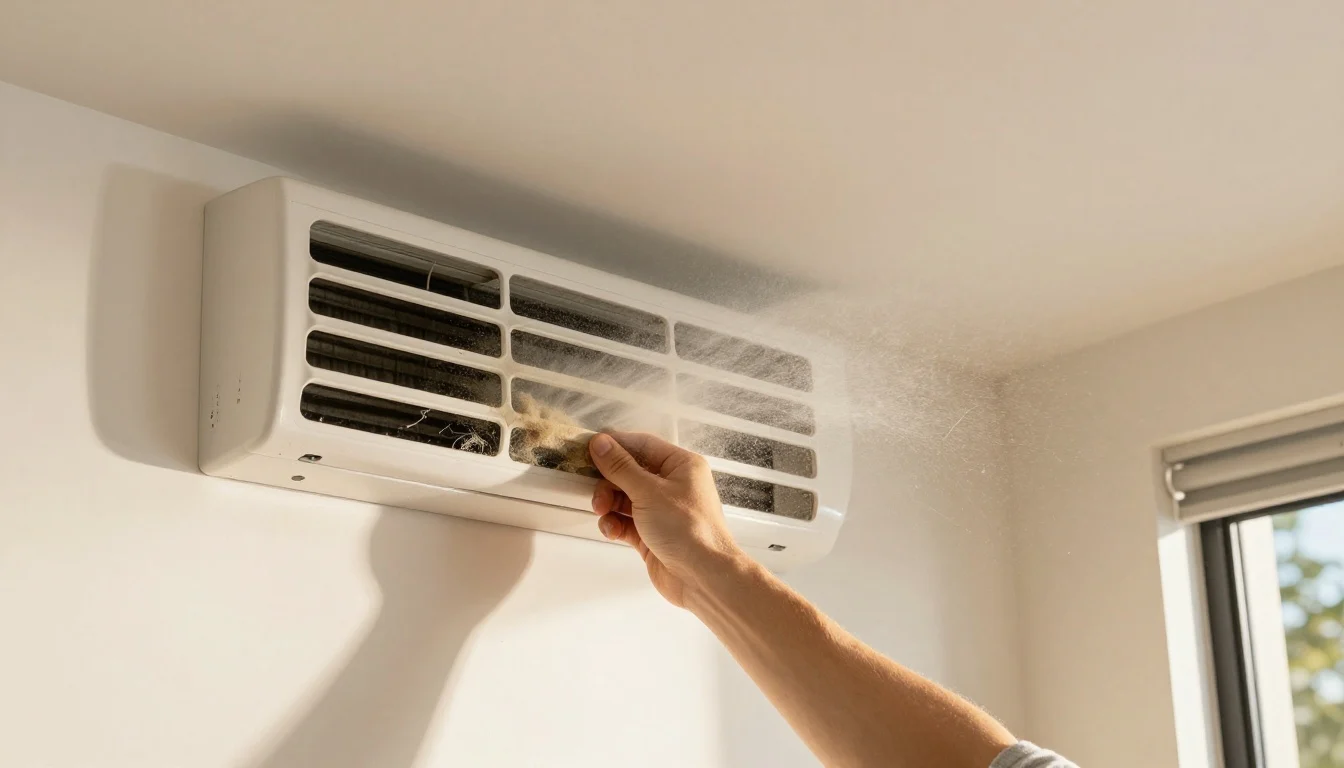
The simplest and most frequent cause of poor cooling is clogged air filters. When dust and pet hair accumulate, they choke the airflow through the indoor unit. You might notice the air blowing out feeling weaker or warmer than usual. Cleaning these filters restores normal volume and prevents the coil from freezing over. You can usually access this cover with a simple snap or slide.
Check Indoor Unit Clearance
Keep Furniture Away from Vents
Even a new installation struggles if the surrounding room restricts airflow. We always recommend maintaining at least 15cm of clearance around the indoor unit for filter access and air circulation. Heavy curtains, tall cupboards, or stacked boxes near the unit can create recirculation zones. This happens when hot air from the room gets pulled back in before cooling the space.
Listen for Specific Noise Types
Rumbling Means Compressor Issues
Noises can pinpoint the fault before you even look at the unit. A distinct grinding or rattling noise often points to a loose mounting screw or pipe vibrating against the wall. If you hear a bubbling or hissing sound, it may indicate a refrigerant leak. These are common signs we look for when diagnosing efficiency problems.
Hissing Signals Refrigerant Problems
Continuous hissing after installation or sudden noise changes suggest issues with the pipes or valves. Sometimes the outdoor unit vibrates excessively due to uneven concrete pads. We verify all mounting brackets are tight during inspections because loose pipes rattle as refrigerant pulses through them.

Read Blinking Light Codes
Modern split systems communicate errors through indicator lights. If a power lamp flashes in a pattern or an error code appears on a small display, your unit has self-diagnosed an issue. Common lights relate to sensor faults or communication failures between the indoor and outdoor units. Always check your manual for these patterns before assuming a major breakdown.
Check Thermostat Settings First
Sometimes the system works fine, but the setting does not match your goal. Ensure you are not on dry mode or a fan-only setting when you need cooling. The temperature dial should be significantly lower than the current room temperature for the compressor to engage. If your remote battery is weak, buttons might fail to register the change.

When Professional Help is Needed
If cleaning filters and checking settings do not resolve the issue, internal problems may exist. Frequent breaker trips indicate electrical faults, while ice forming on the pipes suggests refrigerant imbalance. We inspect these faults to find compliance with local codes and safety standards.
For reliable split system troubleshooting or to discuss an installation that fits your home layout, we provide clear quotes before we start work. Reach us at 0420 718 827 or email moc.liamtsaf@trepxeca to book a service visit.


.jpg "Effective Split System Troubleshooting for Brisbane Homes")