




Winter in South East Queensland doesn’t hammer you like a Victorian cold snap, but those dry, still nights can cut through an uninsulated brick veneer like
a blunt knife. The problem is most homes here were built to shed heat, not hold it. That means your reverse cycle split system works overtime every time the mercury drops below 10°C. If you’ve been watching your power bill climb and wondering whether a jumper is cheaper than a degree warmer, you’re not wrong. The trick isn’t just turning up the set point – it’s making every watt count. Here are the energy efficient winter heating SE QLD homeowners need right now, backed by Australian standards and real-world trade experience.
heating tips for se qld
Why SE QLD Homes Leak Heat (and What to Do About It)
Most houses in SEQ were designed with summer in mind: wide eaves, minimal insulation, lots of single-glazed windows. That’s fine when you’re trying to keep 35°C out, but it’s a nightmare when you’re trying to keep 18°C in. The biggest heat loss points are the ceiling, windows, and external walls. According to AS/NZS 4859.1, the minimum insulation level for new homes in our climate zone is R4.0 for ceilings and R2.0 for walls, but a huge number of older homes have sweet bugger-all.
Ceiling Insulation – The Low-Hanging Fruit
If your ceiling has less than R3.0, you’re basically heating the sky. Adding R4.0 batts or blow-in cellulose can cut heating load by 30–40%. It’s a dirty job but it pays for itself in two winters. Get a qualified installer with an ARC tick if you’re retrofitting wiring – don’t DIY over downlights without proper clearance.
Draft Sealing – The Cheap Fix
Feel around doors, windows, and the gap under your external door. A 5mm gap under a standard 900mm door is equivalent to leaving a small window open 24/7. Stick-on foam weather seal, a door snake, and some silicone around window frames are under $50 from Bunnings and will stop the cold draughts immediately. One of the best energy efficient winter heating SE QLD strategies costs less than a pizza.
Curtains – Your Second Set of Walls
Curtains are not decoration in winter. They are thermal barriers. Single-glazed windows have an R-value around 0.15 – essentially nothing. A good set of lined blockout curtains with a pelmet (the box at the top that stops convective airflow) can add R1.0 or more. That matters.
Close Them at Dusk, Open Them at Midday
When the sun goes down, close all curtains on windows that face south and west first. North-facing windows can stay open a little longer if they’ve been collecting sun, but once the glass is cold, close them. And for goodness sake, open the curtains on north-facing windows during the day – even on a cloudy winter day, passive solar gain can raise indoor temperature by 2–3°C for free. This is the kind of energy efficient winter heating SE QLD residents ignore because they think curtains are just for privacy. They’re not.
Pelmet or No Pelmet?
Without a pelmet, warm room air flows over the top of the curtain and down the cold glass, creating a convection loop that cools the whole room. A simple fabric pelmet or a shelf above the curtain rail stops this. It looks tidy and it works.

Thermostat Strategies That Actually Save Power
Reverse cycle heating is inherently efficient – a modern split system can deliver 4 kW of heat for every 1 kW of electricity. But if you set the thermostat to 24°C and your house is drafty, the compressor never cycles off. The secret is to find the lowest comfortable set point. The Australian Government’s Energy Rating website recommends 18–20°C in winter for SE QLD. That’s bathrobe temperature for some people, but it’s where the efficiency lives.
heating tips for se qld — what matters
Use the Timer, Not the Boost
Instead of blasting the system from cold when you get home, set the timer so the room is already at 18°C when you walk in. That takes about 30 minutes of pre-heating, whereas a full recovery from 8°C to 20°C might take an hour and use more total energy because the compressor has to work against a bigger temperature delta. Also never use the ‘turbo’ or ‘powerful’ mode for heating – it just runs the fan at max which mixes the warm air up into the ceiling.
Zone Control for Multi-Heads and Ducted Systems
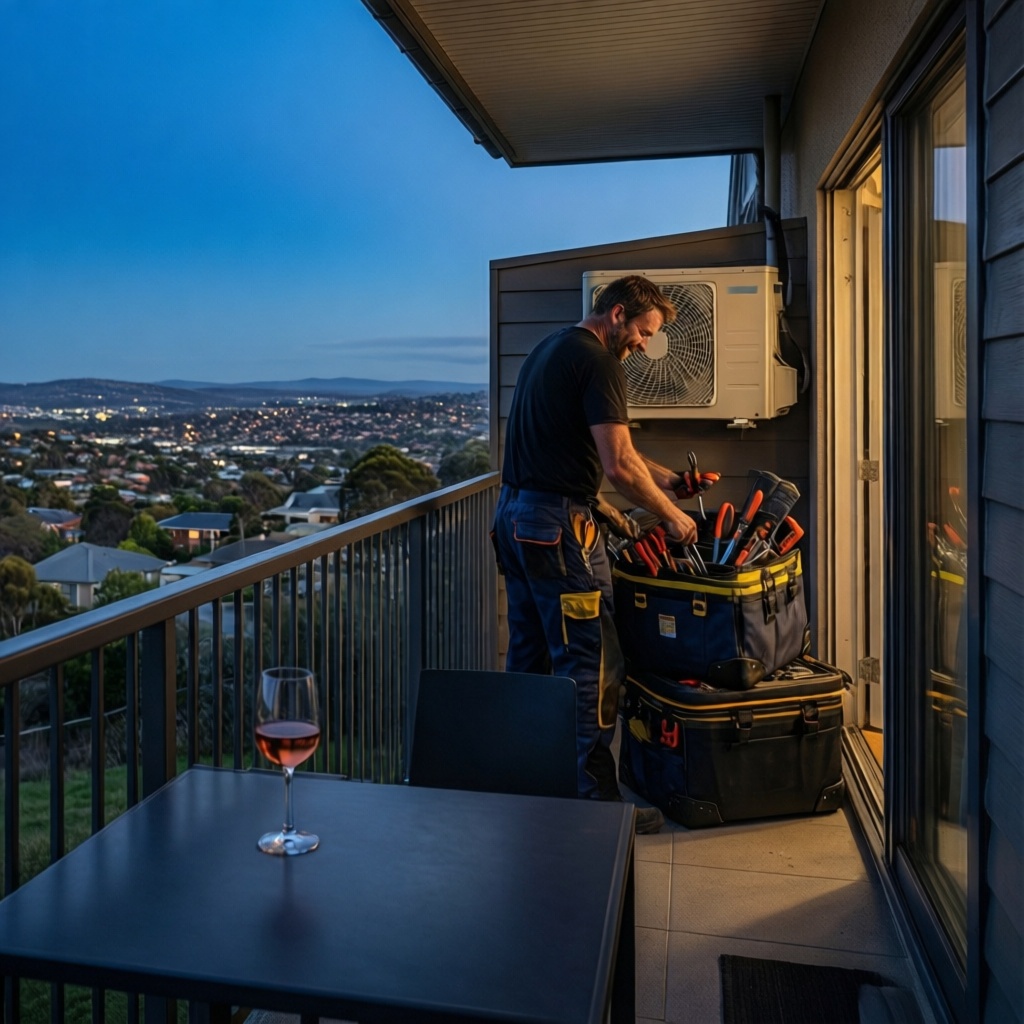
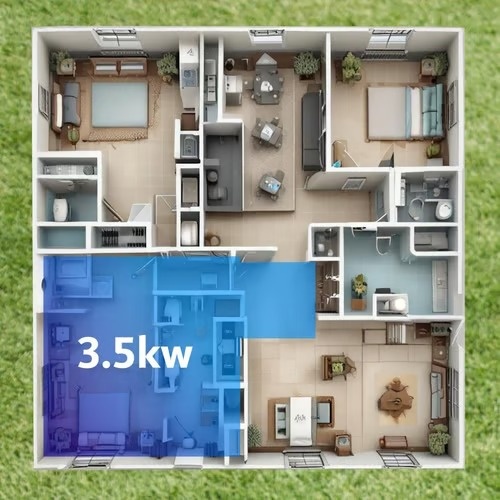
If you have a multi-head split system, only heat the rooms you’re actually using. Close the doors. For ducted systems, use zoning to shut off bedrooms during the day and living spaces at night. Every metre you don’t heat saves money. This is pure common sense but I’ve seen tradies in houses where every zone was open ‘just because’. Barmy.
Maintenance Matters – Don’t Skip the Pre-Winter Clean
A dirty air filter can reduce heating efficiency by 15–25%. Wash your indoor unit filters every month during winter (or at least check them). Outdoor units also need clearing – if the coil is coated in dust or leaf debris, it can’t absorb heat from the outside air effectively. Reverse cycle works even when it’s cold because the refrigerant can still pick up ambient heat, but a blocked coil kills that transfer.
If your system is more than 10 years old and running on R22 refrigerant, consider a replacement. R22 is being phased out and is expensive to top up. A modern inverter unit with R32 will be significantly more efficient and quieter. While you’re at it, check the controller batteries – half the winter complaints I see are from people who can’t get the heater to turn on because the remote is dead. True story.
One last thing – don’t forget the smoke alarm at the same time. You’re messing with the ceiling, might as well swap that 9V battery while you’re up there.
Putting It All Together – A Practical Winter Routine
Here’s a simple checklist for energy efficient winter heating SE QLD style:
- Check and seal drafts around doors and windows (under $50).
- Ensure ceiling insulation is at least R4.0.
- Fit lined curtains with a pelmet, especially on west and south windows.
- Open north-facing curtains during sunny days; close all curtains at dusk.
- Set thermostat to 18–20°C and use the timer function.
- Clean air filters monthly and clear outdoor unit debris.
- Only heat the rooms you’re using; close internal doors.
By combining these small changes, most households can reduce their winter heating power consumption by 30–50%. That’s not a typo. And the best part: the most effective measure – good curtains and draft sealing – costs less than a single service call.
If you’re in Brisbane and need a qualified technician to check your system or install insulation, get a free quote through the site. Stay warm, and remember: a jumper is cheaper than a degree, but a well-sealed house is the real winner.
.jpg "Energy Efficient Winter Heating Tips for SE QLD Homes")