




Winter has a way of making even the best-insulated Australian homes feel a bit draughty. While ducted heating is common in new builds, many Queensland homes rely on reverse cycle split systems to keep bedrooms and small living areas warm. The key to getting cosy without blowing the power bill is understanding how split system heating in winter performs when the space is small and the outdoor temperature drops.
split system heating winter
Why Small Rooms Matter for Split System Heating in Winter
The Efficiency of Zoned Heating
Heating just the room you’re using — rather than the whole house — can cut running costs by up to 30 per cent. Split systems are naturally suited to zone heating because each indoor unit controls its own space. You can heat the bedroom at night and the living area during the day, and each room can be heated seperately with its own thermostat. That targeted approach is where split system heating in winter really shines.
Avoiding Oversized Systems
A common mistake is installing a unit that’s too powerful for a small bedroom. That leads to short cycling, poor humidity control (even in winter), and wasted energy. In a small room, a 2.5kW or 3.5kW unit is often plenty. Putting a 7kW unit in a 12m² bedroom is like a possum in a nightclub — it just doesn’t belong there. It’ll cool down too fast in summer and heat up too aggressively in winter, leaving you uncomfortable and your bank account lighter.
Sizing Your Split System for a Bedroom or Small Living Area
kW Ratings and Room Volume
As a rule of thumb, you need about 120 watts per square metre for heating in SE Qld. But that changes with ceiling height, window area, and insulation. A standard 3m x 4m bedroom with a 2.4m ceiling needs roughly 1.5kW, but you’ll rarely find a unit below 2.5kW. That’s fine — the inverter will ramp down to match the load. Just don’t go too large or you’ll lose efficiency.
AS/NZS 5149 Considerations
Australian Standard AS/NZS 5149 covers refrigerant safety. In small rooms, the refrigerant charge must not exceed a certain limit if there’s a leak risk. Always check the manufacturer’s data or get a licensed tech to verify. For tradies: remember the room area calculation for R32 systems — a small bedroom can quickly limit the allowable charge.
Placement and Airflow Tricks
Mounting Height and Louver Direction
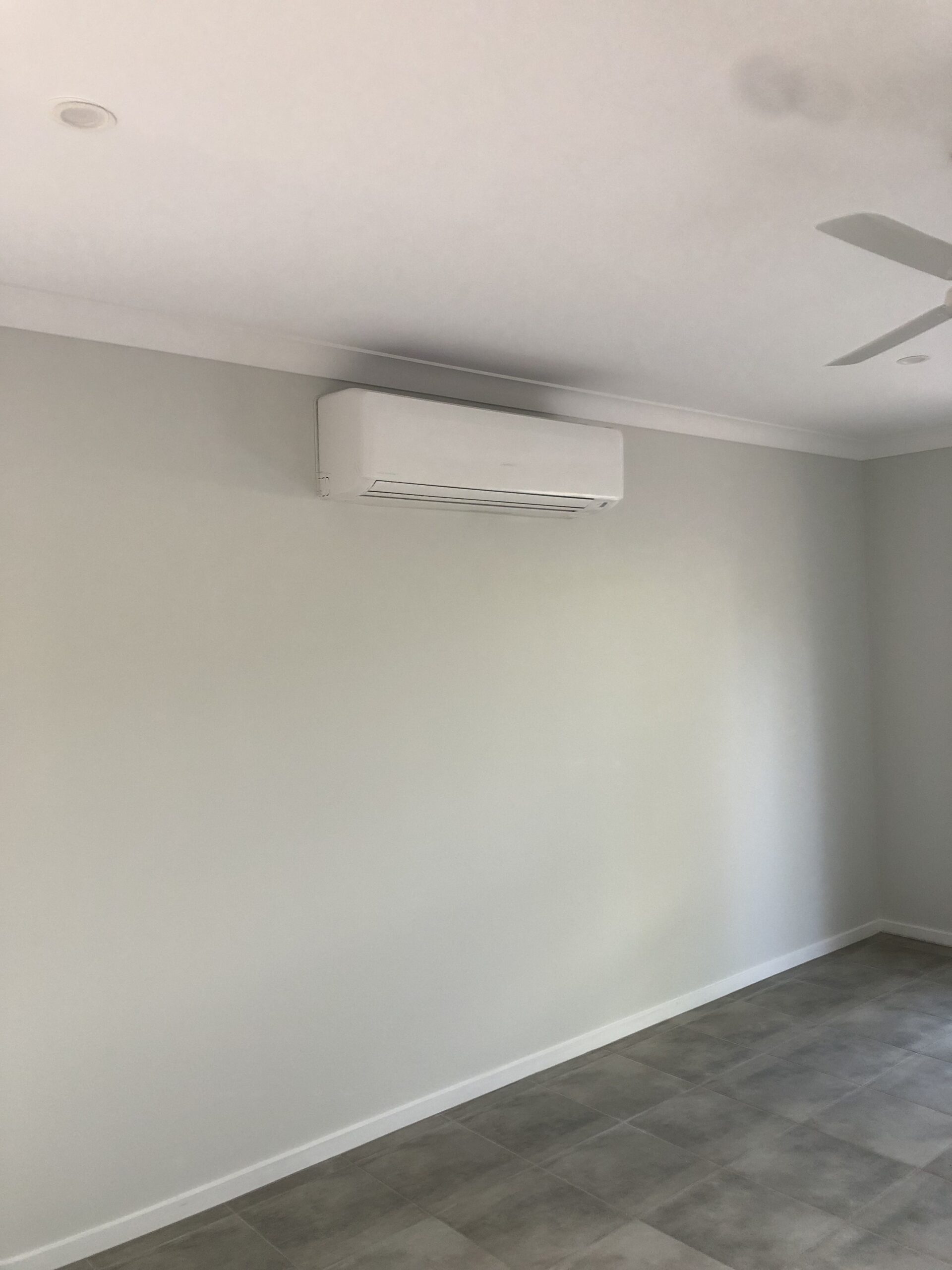
Heat rises. For winter heating, mount the indoor unit on a wall that’s free of obstructions, and angle the louvers downward so the warm air reaches the floor. If the unit is above a door or window, consider a deflector to push the air away from the ceiling. Running the system on high fan, the room warms up faster but it also stirs up dust — so keep it moderate.
split system heating winter — what matters
Using Ceiling Fans to Assist
Running a ceiling fan on low, reverse direction pushes warm air trapped at the ceiling back down. This can make a 2.5kW unit feel like a 3.5kW one. It’s a simple trick that costs nothing and can boost the effectiveness of split system heating in winter without extra power draw.
Maintenance Tips for Winter Performance
Cleaning Filters and Checking Refrigerant
“A dirty filter is the number one reason for poor heating performance,” says one Brisbane tech.
Clean filters every month during heavy use. A clogged filter restricts airflow, making the unit work harder and reducing heat output. Also check the outdoor coil for leaves and debris — winter storms can block it up.
Pre-Heating Checks
Before winter hits, have a technician (ARC tick required) check the refrigerant charge, clean the outdoor coil, and inspect for leaks. If you’re low on gas, the system will blow warm-ish air but never reach set temperature. A quick service in autumn can prevent a freezing bedroom in July.
Cost and Running Time Strategies
Using Timers and Thermostats
Most split systems have a timer function. Set it to turn on 30 minutes before you wake up or come home. You don’t need to run the unit all day — small rooms heat up quickly. A programmable thermostat can also help maintain a steady temp without wasting energy. In small spaces, even a 1°C setback can shave dollars off your quarterly bill.
If you’re in Brisbane and need a qualified technician, get a free quote through the site to make sure your split system heating in winter is set up right.
.jpg "Split System Heating Winter: Big Results in Small Rooms")