




In response to: the original article at yahoo.com
If you have been keeping an eye on the property market lately, you have probably noticed that the talk of the town isn’t just about interest rates or the lack of rentals. It is about the “future of construction.” We are told that 3D-printed homes emerge as a fast-track solution to Australia’s housing shortage, and frankly, I am raising a skeptical eyebrow while clutching my coffee. The idea is that we can just fire up a giant printer, layer some concrete, and watch a house materialize in record time. It sounds like something out of a futuristic cartoon, but as someone who spends his days navigating the practical realities of Brisbane home infrastructure, I have a few questions about how these high-tech structures handle our sub-tropical reality.
The Hype Behind 3D-Printed Homes
The premise of 3D-printed homes is undeniably slick. We are hearing stories about 10% cost savings and construction speeds that make traditional bricklayers look like they are moving in slow motion. Developers are excited, tech enthusiasts are swooning, and the media is painting a picture of an automated utopia where the housing crisis is solved by a nozzle moving in circles. It’s a compelling narrative, especially when you are looking at the staggering numbers regarding Australia’s goal of building 1.2 million new homes by 2029.
But let’s look at the claim that these houses are “warmer and stronger.” While concrete has thermal mass, anyone who has lived in a concrete slab home during a Brisbane summer knows that thermal mass is a double-edged sword. It holds onto heat like a toddler holds onto a toy, which is fantastic for a chilly night in July but a real headache when you are trying to keep your living room cool during a February heatwave. The marketing materials rarely talk about the specific HVAC challenges of living in a giant, hollowed-out concrete shell, but that is exactly where the rubber—or in my case, the refrigerant—meets the road.
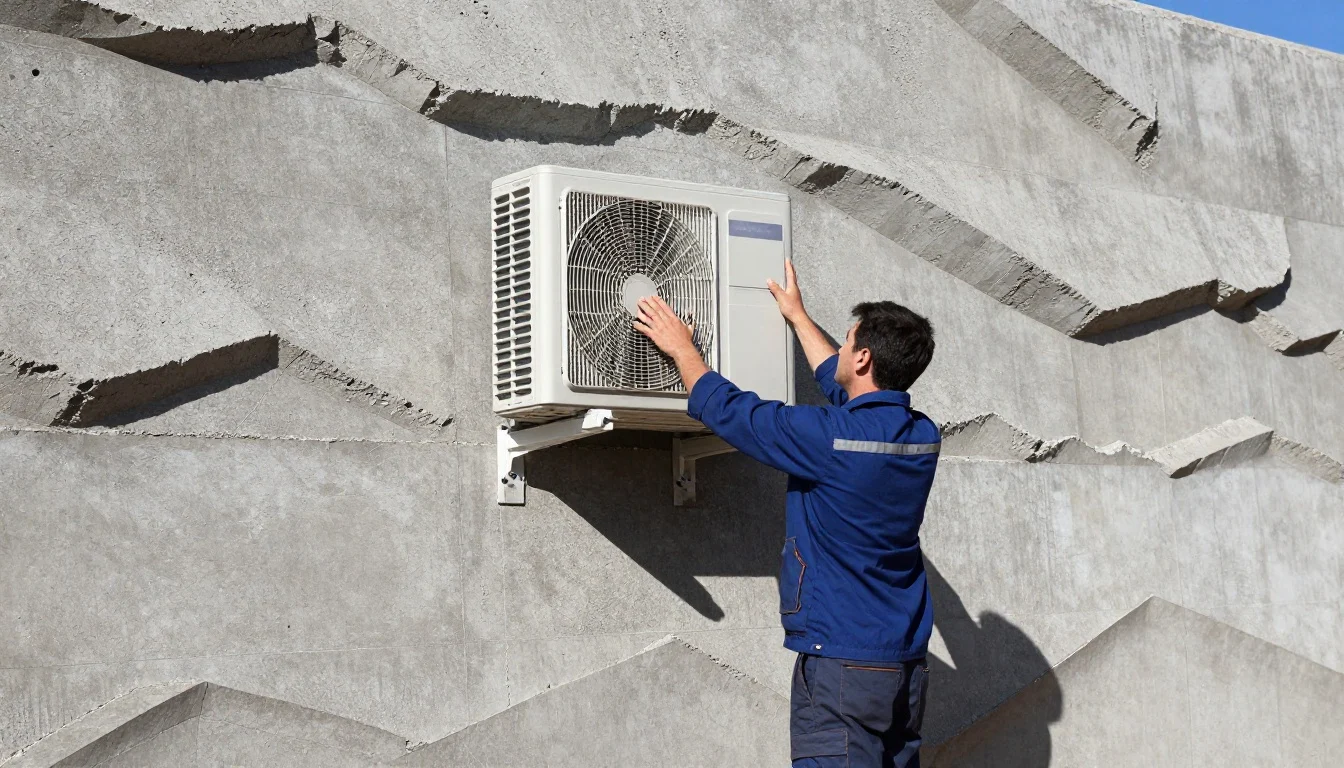
Is the Technology Ready for Brisbane?
Proponents of 3D-printed homes claim that the durability of these structures is unmatched. They point to the concrete being stronger than standard masonry, which is all well and good if you are worried about, say, a stray bulldozer hitting your living room. But for the average homeowner in Brisbane, durability usually means “how well does this house breathe?”
When you start printing homes with a massive robotic arm, you aren’t just creating walls; you are creating a very specific type of envelope. The efficiency of your cooling system depends entirely on how well that envelope manages heat transfer. If these structures are airtight and dense, they will require a highly efficient air conditioning installation to avoid becoming a literal convection oven. We have seen plenty of “innovative” construction materials hit the market over the last decade, and often, the people installing the climate control systems are the ones left to figure out how to make the place actually habitable.

Efficiency and the Reality of Modern Construction
The industry loves to throw around the word “efficiency.” It is the magic buzzword that makes investors happy and homebuyers feel like they are doing the right thing for the planet. 3D-printed homes are being marketed as the pinnacle of efficiency because they produce less waste and use fewer on-site laborers. That is undeniably a win for the builder’s bottom line. However, the true measure of a home’s efficiency is how it performs once the front door is locked and the air conditioner is turned on.
If you are considering a move into a future-focused home, you have to look beyond the “printed” aspect. Whether the walls are traditional brick, timber frame, or a series of layers extruded by a massive robotic printer, you still have the same fundamental thermodynamics to deal with. Queensland homes, whether they were built in 1950 or 2025, live and die by their ability to vent moisture and maintain a stable internal temperature. A 3D-printed home that doesn’t account for proper cross-ventilation or thermal insulation is going to be just as expensive to run as a leaky old terrace house.

Practical Considerations for Homeowners
Before you get too caught up in the excitement of 3D-printed homes, let’s consider what this means for you, the homeowner, in the long run. If your home is built using proprietary automated technology, who do you call when you need to mount a heavy bracket for a split-system air conditioner? Where do the pipes go? How does the structural integrity of a “printed” wall react to the vibrations of a high-performance heat pump?
We see it all the time: homeowners buy a brand-new “ultra-modern” house only to find that the walls are a nightmare to work with. Electrical runs are tricky, mounting brackets require specialized gear, and the overall design sometimes favors form over function. As we look toward the 2029 construction targets, it is important to remember that rapid construction is great for solving a crisis, but it shouldn’t come at the expense of the longevity and serviceability of the building. You want a home that is as easy to maintain in twenty years as it is to live in today.

The Future vs. The Reality
I have seen a lot of trends come and go in the Brisbane construction market. We have seen the shift to prefabrication, the rise of “green” building certifications, and now the surge of interest in 3D-printed homes. Each time, the promise is the same: faster, cheaper, better. And each time, the reality is a bit more nuanced. Sure, we need more housing, and if we can use technology to reduce the time it takes to frame a house, then more power to the innovators.
However, let’s not mistake the “wow” factor of a giant printer for a magic wand. There is no replacement for thoughtful design. Whether the structure is built by a human with a trowel or a robot with a nozzle, the principles of comfort remain identical. A well-insulated home, properly positioned for the sun, and equipped with a modern, high-efficiency split-system air conditioner, will always outperform a “tech-heavy” home that ignores the basics of thermodynamics.

If the future of construction really involves 3D-printed homes becoming a nationwide standard, we are going to need a serious conversation about how these homes integrate with the vital systems that make them liveable. It’s one thing to print a box, but it is entirely another to turn that box into a home that keeps a Brisbane family comfortable through a humid summer. So, by all means, look into these new methods. But don’t let the novelty distract you from asking the important questions: how is this wall made, how does it handle moisture, and is it going to be a dream or a headache to install and run the services that actually keep me cool?
Ultimately, the “future of construction” should look like houses that work better for the people living in them. If these new methods can deliver that, then I’ll be the first to recommend them. Until then, I will stick to what I know: professional installation, high-efficiency units, and a healthy dose of common sense. Because no matter how your home is built, keeping it comfortable is a job that requires more than just a printer—it requires a bit of human expertise.
.jpg "Professional Split System Air Conditioner Installation in Brisbane")